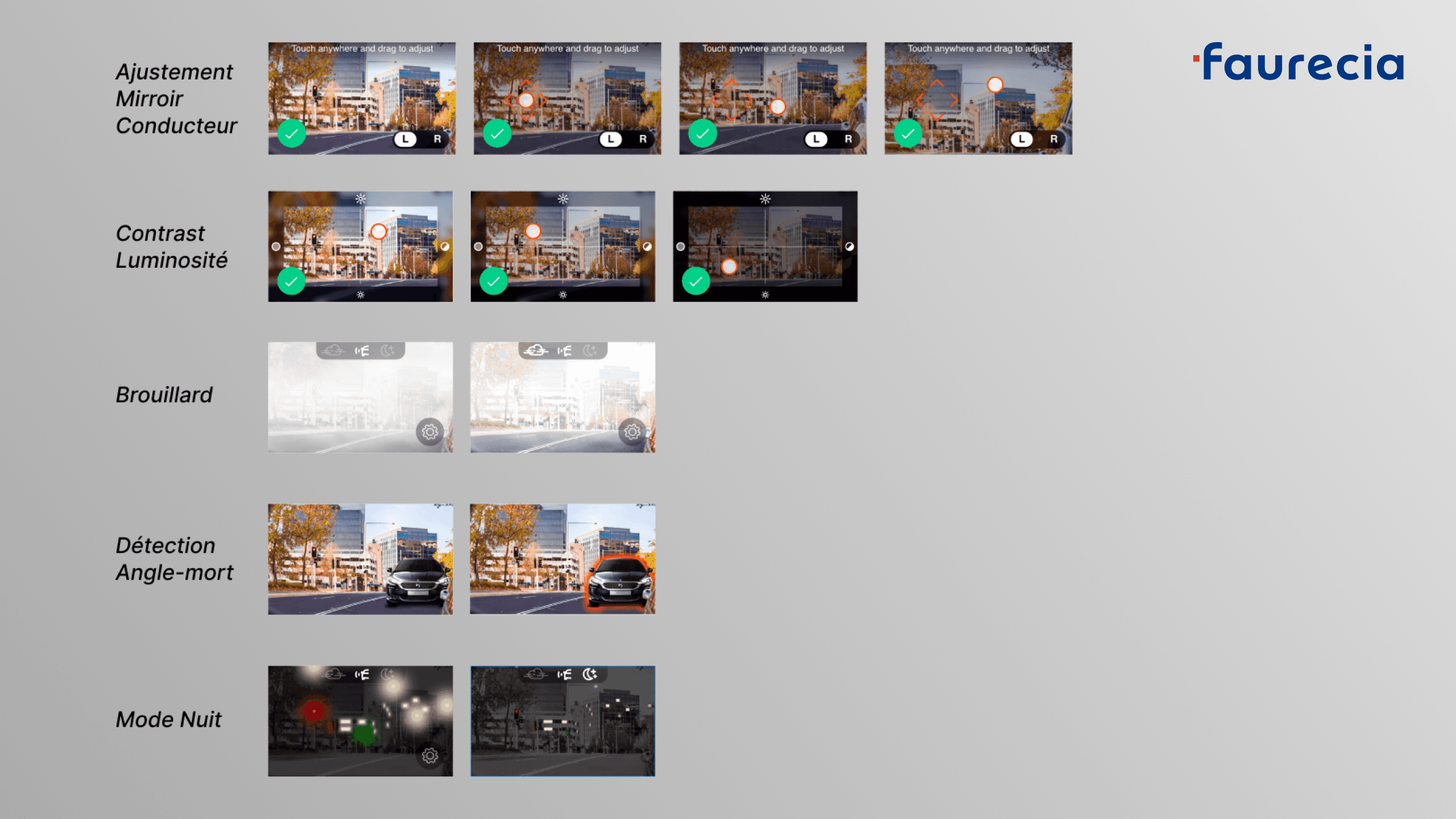
E-Mirror
Embedded software
Summary
At Faurecia, I participated in the design of an interface replacing conventional mirrors with an embedded digital system. The project aimed to ensure a safe and intuitive experience for the driver, while considering the ergonomic constraints of driving.
Context
Product : Embedded user interface for rearview camera system
Company : Faurecia, automotive supplier
Target users : Drivers of vehicles equipped with digital side view systems
Issues :
Provide a credible and ergonomic alternative to the traditional rearview mirror
Ensure immediate readability and distraction-free navigation
Offer an embedded interface compliant with automotive safety standards
Problems to solve
Absence of visual or gestural user cues in the first prototypes
Unintuitive behavior in interactions with the interface
Risk of cognitive overload while driving
Methodology
Research and Inspiration :
Study of automotive ergonomics standards and competitors in the market
Internal testing on vehicle prototypes
Ideation and Prototyping :
Defining the main functions of the system
Creating wireframes and workflows
High-fidelity mockups with Adobe XD
Collaboration & Tools :
Interdisciplinary work with the UX, HMI, and technical teams (France, Germany, India)
Integration of embedded development constraints
Testing and Iterations :
Real-world evaluations in test vehicles
Adjustments to the responsiveness and positioning of elements
Results & Impact
Deliverables :
Complete interface with embedded navigation logic
Functional documentation for developers
Impact :
Intuitive interface validated in a real context
Contribution to the evolution of HMI standards at Faurecia
Feedback :
This project allowed me to delve into the specific constraints of the automotive interface, balancing technological innovation and safety rigor.
Project Link






© 2025 Mehdi Maalej